At 5,895 metres above sea level, Uhuru Peak does not ask whether you are ready. It simply waits — patient, ancient, and extraordinary — for those who decide to come.
Introduction
There is a particular kind of ambition that stirs in people when they first see a photograph of Mount Kilimanjaro rising above the African plains — its glaciated summit floating impossibly above a carpet of cloud, the flatlands of Tanzania stretching away in every direction far below. It is the ambition not just to travel, but to achieve something. To stand somewhere that demands everything you have and rewards you with a view that justifies every step.
Kilimanjaro tours make that ambition achievable. Unlike the Himalayas or the high peaks of South America, Kilimanjaro requires no technical climbing skills, no ropes, no ice axes, and no previous mountaineering experience. What it requires is physical fitness, mental determination, the right preparation, and — above all — the guidance of experienced, knowledgeable professionals who know this mountain intimately and are committed to getting you to the summit safely.
At 5,895 metres, Kilimanjaro is the highest peak in Africa, the highest free-standing mountain in the world, and one of the celebrated Seven Summits. It rises from the surrounding savanna in three distinct volcanic cones — Kibo, Mawenzi, and Shira — creating an ecosystem of extraordinary vertical diversity that takes trekkers through five distinct climatic zones in the span of a few days: tropical rainforest, heath and moorland, alpine desert, and finally the glaciated arctic summit zone. The journey from the park gate to Uhuru Peak is, in the truest sense, a journey through multiple worlds.
This guide covers everything you need to know about planning a Kilimanjaro tour — from route selection and operator choice to physical preparation, acclimatisation strategy, and what to genuinely expect from one of the most extraordinary walking experiences on the planet.
Why Choose a Kilimanjaro Tour
The question is not really why climb Kilimanjaro — the mountain answers that for itself. The real question is why book a structured Kilimanjaro tour rather than attempting some form of independent ascent. The answer is straightforward: Tanzania’s national park regulations require that all trekkers on Kilimanjaro be accompanied by a registered, licensed guide at all times. Independent trekking without a guide is not permitted. But beyond the regulatory requirement, the case for booking a well-structured Kilimanjaro tour through a reputable operator is overwhelming on its own merits.
A quality Kilimanjaro tour provides you with a professional mountain guide whose expertise extends far beyond route navigation. Experienced Kilimanjaro guides monitor your acclimatisation continuously throughout the climb — assessing symptoms of altitude sickness, adjusting pace, making critical decisions about whether to push forward or descend, and providing the kind of mountain-specific knowledge that only years on Kilimanjaro can produce. They know where the best lunch spots are on each route, which campsites have the most sheltered positions, how to read the summit weather, and how to manage a group’s collective energy and morale through the demanding pre-dawn summit push.
A reputable tour operator also manages the extensive logistics that make a Kilimanjaro climb possible — park fees (which are substantial), camping equipment, all meals on the mountain, the team of porters who carry the group’s equipment, rescue equipment, and all the permits and paperwork that Tanzania’s park authority requires. Attempting to coordinate this independently would be both practically complex and ultimately no less expensive than booking a structured tour.
Most importantly, a good Kilimanjaro tour operator invests in the welfare of their mountain crew. The porters who carry your bags, prepare your meals, and set up your camp on Kilimanjaro are the unsung heroes of every successful summit. Choosing an operator who pays fair wages, provides adequate equipment, and adheres to the Kilimanjaro Porters Assistance Project (KPAP) guidelines is both an ethical responsibility and, practically speaking, a reliable indicator of overall quality.
The Routes: Choosing the Right Path to the Summit
Kilimanjaro has six established trekking routes, each offering a different experience in terms of scenery, duration, difficulty, traffic level, and summit success rate. Selecting the right route is one of the most consequential decisions in planning your Kilimanjaro tour.
Lemosho Route — The Finest Overall Experience
The Lemosho Route is widely regarded by experienced Kilimanjaro guides and operators as the single best route on the mountain for the combination of scenery, acclimatisation profile, and summit success rate. Approaching from the west, Lemosho traverses the entire width of the mountain before joining the Southern Circuit and ascending to Uhuru Peak via Barafu Camp. The route takes 7 to 8 days, allowing excellent acclimatisation, and passes through some of Kilimanjaro’s most dramatic and varied landscapes including the remote Shira Plateau and the spectacular Lava Tower. Crowding is minimal compared to the popular routes, and the longer duration gives your body the best possible chance to adapt to altitude. Summit success rates on the 8-day Lemosho are among the highest on the mountain.
Machame Route — The Most Popular Scenic Route
Known as the “Whiskey Route” for its reputation as a more challenging alternative to the Coca-Cola route, Machame is Kilimanjaro’s most popular trail and for good reason. It combines exceptional scenery with a good acclimatisation profile — particularly on the 7-day option, which includes an important acclimatisation day at the Karanga Valley before the final push. The route approaches from the south and southwest, passing through lush rainforest, dramatic moorland, and the iconic Barranco Wall — a steep but non-technical scramble that rewards climbers with panoramic views and a genuine sense of mountain achievement.
Marangu Route — The Classic Hut Route
The Marangu Route is Kilimanjaro’s oldest established trail and the only route that uses hut accommodation rather than tents, offering dormitory-style sleeping in permanent mountain huts at each camp. This makes it the most comfortable option from a sleeping perspective, and it is often marketed as the “easiest” route — a characterisation that is somewhat misleading, since Marangu’s shorter 5-day standard itinerary actually provides less acclimatisation time than the longer routes, resulting in lower overall summit success rates. The 6-day Marangu option is significantly better. The route ascends and descends the same path, limiting scenic variety but simplifying logistics.
Rongai Route — The Northern Approach
Approaching from the north near the Kenyan border, the Rongai Route is Kilimanjaro’s most remote and least-visited established trail, offering a sense of true wilderness and solitude that the busier southern routes cannot match. The northern approach receives less rainfall than the southern slopes, meaning clearer days and exceptional views of Mawenzi Peak throughout the climb. Rongai is an excellent choice for travellers who prioritise solitude and a different perspective on the mountain, and its 6 to 7-day itinerary provides a good acclimatisation profile.
Northern Circuit — Maximum Acclimatisation, Maximum Scenery
The Northern Circuit is Kilimanjaro’s longest route at 9 days, completing a near-full circuit of the mountain before the final summit push. Its extended duration provides the best possible acclimatisation profile and consequently the highest summit success rates of any route on Kilimanjaro. The Northern Circuit passes through the most remote and pristine sections of the mountain, with exceptional wildlife sightings possible in the northern moorland zone. For serious trekkers who want the absolute best chance of success and are willing to invest additional time, the Northern Circuit is the ultimate choice.
Umbwe Route — For the Experienced Only
The Umbwe Route is Kilimanjaro’s most direct and most demanding trail — a steep, relentless ascent from the southern rainforest that leaves virtually no time for acclimatisation. Summit success rates on Umbwe are significantly lower than other routes, and it is genuinely only suitable for very fit, experienced trekkers who have performed well at altitude previously. It is not recommended for first-time high-altitude trekkers regardless of fitness level.
Physical Preparation: Building Your Kilimanjaro Fitness
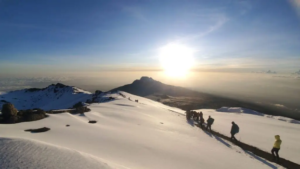
One of the most common misconceptions about Kilimanjaro is that extreme athletic ability is required. It is not. However, a meaningful, structured preparation programme significantly improves both your summit success rate and your enjoyment of the experience.
The primary physical demands of a Kilimanjaro tour are cardiovascular endurance and leg strength — the ability to walk for 6 to 8 hours per day, day after day, over sometimes steep and uneven terrain. Training should begin at least 3 to 4 months before your climb and should include:
- Long-distance hiking with progressive distance and elevation gain — aim for at least one 15 to 20 kilometre hike per week on varied terrain, including hills
- Cardiovascular training — running, cycling, swimming, or stair climbing for 45 to 60 minutes at moderate intensity, four to five times per week
- Strength training — focusing on quadriceps, hamstrings, glutes, and core, which bear the primary load during steep ascents and descents
- Altitude simulation — if access to high elevation is possible before your trip, one or two weekends at altitude (above 3,000 metres) is enormously valuable preparation
The summit night — a 6 to 8 hour push from base camp starting at midnight, at altitudes above 5,000 metres in temperatures that can drop to -20°C — is the most demanding section of the entire climb. The cold, the darkness, the thinning air, and the cumulative fatigue of the preceding days combine into a genuine physical and psychological test. Being well-prepared does not make it easy. But it makes it possible.
Acclimatisation: The Key to Summit Success
The single greatest factor determining whether a trekker reaches Uhuru Peak is not fitness — it is acclimatisation. Acute Mountain Sickness (AMS) affects a significant proportion of Kilimanjaro trekkers, and its symptoms — headache, nausea, dizziness, fatigue, and loss of appetite — can stop even the fittest climbers in their tracks. In severe cases, High Altitude Pulmonary Oedema (HAPE) or High Altitude Cerebral Oedema (HACE) can develop rapidly and require immediate descent.
The principles of successful acclimatisation are well established. Climb high, sleep low — ascending during the day to higher elevations and descending to camp at a lower altitude each evening — stimulates red blood cell production without the risks of continuous high-altitude sleeping. Routes like Lemosho and the Northern Circuit are specifically designed around this principle, incorporating deliberate acclimatisation days and altitude variation that give the body maximum time to adapt.
Staying well-hydrated — drinking at least 3 to 4 litres of water per day on the mountain — is critical. The dry, cold air at altitude accelerates moisture loss dramatically. Diamox (acetazolamide) is a commonly prescribed medication that assists acclimatisation and reduces AMS symptoms; discuss its use with your doctor before the climb. Most importantly: never ignore AMS symptoms, and never feel pressure to push through them. A responsible Kilimanjaro tour operator will always prioritise your safety over summit statistics.
What to Expect: A Day-by-Day Reality
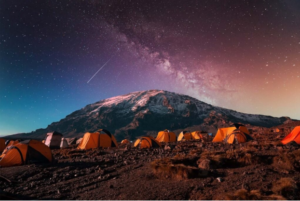
The rhythm of a Kilimanjaro tour is defined by its simplicity. Each day begins early — typically between 7 and 8 in the morning — with breakfast prepared by the mountain crew before breaking camp and beginning the day’s walk. Guides lead at a deliberately slow, measured pace — the famous pole pole (slowly, slowly) that is the cardinal rule of altitude trekking. Lunch is taken on the trail or at a designated rest area. Afternoons bring arrival at the next camp, where tents are already set up by the porters who move ahead of the group. Hot meals are prepared, Diamox checks are conducted, and early sleep — typically by 8 or 9 pm — prepares the body for the next day’s effort.
Camp life on Kilimanjaro has a communal warmth that surprises most first-time trekkers. The mountain crew — guides, assistant guides, cooks, and porters — carry a genuine pride in the mountain they know so well, and the bonds that form between trekkers and their team over the course of a week on the mountain are among the most cherished memories of the entire experience.
Choosing the Right Kilimanjaro Tour Operator
With dozens of operators offering Kilimanjaro tours, the quality differential between the best and the worst is enormous. Choosing well is one of the most important decisions you will make.
Look for operators who are registered with TATO (Tanzania Association of Tour Operators) and who are active participants in the Kilimanjaro Porters Assistance Project (KPAP). Check summit success rates honestly — reputable operators publish their rates transparently and do not inflate them. Ask specifically about your assigned guides’ experience — how many summits have they made, how long have they been guiding on Kilimanjaro, and what medical training do they hold?
Avoid operators offering significantly below-market prices. Kilimanjaro has a fixed cost floor established by park fees, porter wages, and equipment requirements. An operator offering a dramatically cheaper package than their competitors is almost certainly cutting corners on porter wages, equipment quality, food, or guide experience — all of which directly affect your safety and summit success.
Conclusion
A Kilimanjaro tour is more than a trek to a summit. It is a full immersion in one of the world’s great mountain environments — a journey through five ecological zones, across landscapes of extraordinary beauty, in the company of a mountain crew whose dedication and warmth become an integral part of the experience. And at the end of it, if preparation and acclimatisation align and the mountain permits, there is Uhuru Peak at dawn — Africa spread below you, the glaciers catching the first light, and the knowledge that you have done something genuinely, permanently remarkable.
The summit is never guaranteed. Kilimanjaro is a high-altitude mountain and it demands respect. But the journey — regardless of whether the final few hundred metres are achievable on a given attempt — is rewarding in ways that cannot be reduced to a single GPS coordinate. The communities of trekkers who share camps, the guides who share their knowledge, the porters who carry the mountain’s burden with quiet dignity, the wildlife that greets you in the morning forest, and the sheer, vertiginous beauty of a world seen from above the clouds — these are the real rewards of a Kilimanjaro tour, and they are available to anyone who chooses to come.
Kilimanjaro does not care about your fitness level, your age, or your accomplishments back home. It only asks one thing: that you show up, keep moving, and go pole pole. Everything else it provides.
Key Takeaways
- Kilimanjaro is the world’s highest free-standing mountain at 5,895 metres and the highest peak in Africa — requiring no technical climbing skills, only fitness, determination, and proper acclimatisation.
- All Kilimanjaro trekkers must use a licensed guide under Tanzania national park regulations — making a structured tour with a reputable operator both legally required and practically essential.
- Route selection is critical — the Lemosho (7–8 days) and Northern Circuit (9 days) offer the best acclimatisation profiles and highest summit success rates; Machame (7 days) is the most popular scenic option.
- Acclimatisation — not fitness — is the primary determinant of summit success. Choosing a longer route gives your body the best possible chance to adapt to altitude progressively.
- Physical preparation should begin 3 to 4 months before your climb, focusing on long-distance hiking, cardiovascular endurance, and leg strength rather than speed or extreme athletic performance.
- Summit night is the defining challenge — a midnight departure, sub-zero temperatures, and 6 to 8 hours of uphill walking above 5,000 metres requires mental resilience as much as physical fitness.
- Porter welfare matters — always choose a KPAP-partnered operator who pays fair wages, provides adequate equipment, and treats their mountain crew with the respect their extraordinary work deserves.
- Kilimanjaro pairs naturally with a Tanzania safari or Zanzibar beach extension — most trekkers place the climb at the beginning of their Tanzania itinerary to ensure peak energy for the mountain challenge.
Frequently Asked Questions (FAQ)
Q: How difficult is a Kilimanjaro tour for an average-fitness person?
A: Kilimanjaro is genuinely achievable for a person of average fitness who has prepared specifically for the climb over 3 to 4 months. The trekking itself is non-technical — there are no ropes, ladders, or scrambling sections beyond the Barranco Wall on Machame and Lemosho. The challenge is altitude. Many highly fit people fail to summit due to acute mountain sickness, while less athletic trekkers with good acclimatisation response succeed. Honest physical preparation and choosing a longer route are more important than peak athletic performance.
Q: What is the best time of year for a Kilimanjaro tour?
A: The two best windows are January to mid-March and June to October. Both periods offer predominantly dry, clear conditions on the mountain with good summit visibility. January to March is slightly warmer and less crowded, making it excellent for wildlife viewing in combination with a safari. June to October is peak season and coincides with Tanzania’s dry safari season — ideal for combining Kilimanjaro with Serengeti or Ngorongoro. December and April to May bring higher rainfall and are generally less favourable, though December is manageable.
Q: How much does a Kilimanjaro tour cost?
A: Costs vary by route, duration, group size, and operator quality. Budget tours on the Marangu route start at approximately $1,500 to $2,000 per person. Mid-range tours on Machame or Lemosho typically run $2,500 to $3,500 per person. Premium private tours with experienced senior guides, high-quality camping equipment, and superior food run $4,000 to $6,000+ per person. Park fees alone (including rescue fees, camping, and conservation levies) account for a significant portion of the total cost and are non-negotiable regardless of operator.
Q: What is the summit success rate on Kilimanjaro?
A: Overall summit success rates across all routes and all operators average approximately 65 percent. However, rates vary dramatically by route and duration. On the 8-day Lemosho, summit success rates with reputable operators regularly exceed 90 percent. On the standard 5-day Marangu, rates can fall below 50 percent due to insufficient acclimatisation time. Choosing the right route and the right operator — and following your guide’s advice carefully throughout the climb — are the most powerful factors within your control.
Q: How many porters and guides will be on my Kilimanjaro tour?
A: A typical well-structured Kilimanjaro tour allocates approximately 3 crew members per trekker — including the head guide, assistant guide, cook, and multiple porters. For a group of 4 trekkers, a crew of 12 to 16 people is normal. Under Tanzania’s park regulations, porters may carry a maximum of 20 kilograms of group equipment, and all crew members must be registered and accredited. A larger, properly staffed crew is a mark of a quality operator — not an unnecessary extravagance.
Q: What gear and equipment do I need for a Kilimanjaro tour?
A: Essential gear includes a warm sleeping bag rated to at least -15°C, layered clothing system (moisture-wicking base layer, insulating mid-layer, waterproof outer shell), insulated down jacket, waterproof trekking boots broken in well before the climb, warm gloves and balaclava, UV-protection sunglasses, trekking poles, a headlamp with spare batteries, and a daypack for personal items during the day’s walk. Most reputable operators provide a detailed equipment checklist; some offer gear rental for items like sleeping bags and trekking poles for travellers who prefer not to bring their own.
Q: Can I do a Kilimanjaro tour at any age?
A: The minimum age for Kilimanjaro trekking under Tanzania’s park regulations is 10 years old, though most operators recommend a minimum of 12 to 16 for genuine safety. There is no maximum age restriction — the oldest verified summiteer was in their late eighties. Age is far less relevant than physical condition, preparation, and acclimatisation response. Many trekkers in their 50s, 60s, and 70s successfully summit Kilimanjaro every year. Consult your doctor before booking if you have any pre-existing cardiovascular or respiratory conditions.
Q: Should I climb Kilimanjaro before or after my Tanzania safari?
A: Almost universally, experienced operators recommend placing Kilimanjaro at the beginning of your Tanzania itinerary. The physical demands of the climb — particularly the cumulative fatigue of summit night — mean that arriving at your first safari game drive already exhausted significantly diminishes the experience. Completing the climb first means you arrive at your safari lodges ready to rest, recover, and enjoy the game drives in a relaxed and energised state. The contrast between the mountain’s intensity and the openness of the Serengeti is also a beautifully satisfying narrative arc for the overall trip.
Uhuru Peak is waiting. The mountain has been there for 750,000 years. It will be patient a little longer — just long enough for you to prepare, book your tour, and come.